Monday, April 27, 2009
Rahula Chapter 6 - Anatta: The Doctrine of No-Self (part 1)
A recording of the teachings and discussion on Chapter 6 of Rahula's "What the Buddha Taught" (from 26th April) can be downloaded here.

Rahula Chapter 5: Magga - The Path
A recording of the teachings and discussion on Chapter 5 of Rahula's "What the Buddha Taught" (from 5th April) can be downloaded here.
Tuesday, April 21, 2009
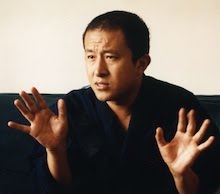
A short message from Rinpoche
In a short note from his retreat, Rinpoche reminds us of the importance of renunciation and the appropriate motivation for practice:
we should say prayers and do practice in the hope that one day we will be free from the agony of time, and from the agony of the separation of all the transitory elements that, in our deluded minds, we have pieced together so convincingly. Most of us are so lost in our delusions that we actually believe them to be permanent, and when the illusion we've created reveals itself in its true colours, we suffer the most unbearable agonies. And it is from this kind of delusion that, ultimately, we need to free ourselves
Monday, March 30, 2009
KFTC audience with HH the Dalai Lama
At the end of the Khyentse Foundation Translation Conference "Translating the Words of the Buddha" in Bir, the participants went to Dharamsala for an audience with HH the Dalai Lama. Here's an extract from his remarks:
I think you already know my views. I believe that in the 21st century, despite a lot of material development and facilities to support us and help provide us with a happy, joyful and meaningful life, there are limitations to having only material values and material development. So all major religious traditions still have an important role today. That’s clear. And one clear indication is that many people have some kind of interest about inner values, and so we have seen the emergence of some strange religions like the New Age and things like that. But this means there are people who are not completely satisfied with material values, and so they are seeking some inner values. People are really seeking something. And some other people might be quite clever at taking advantage of that opportunity. But under such circumstances, the buddhadharma certainly has a similar role to play in this century. Among the different traditions, I think all the major religions have the same potential to help humanity. But for those people who are generally a little sceptical about religion, and who aren’t easily convinced about God or such things, then Buddhism can help. Even among Buddhists who have a keen interest in Buddhism, there are still many who are sceptical about next life. In such a period I think certainly Buddhism may have greater potential to help such people, who love reasons and explanation. For such people, I think the Buddhist approach is suitable.
Nothing To Be Frightened Of
As we reflect on the Four Noble Truths, impermanence, and the nature of life and death, I'd like to recommend "Nothing To Be Frightened Of", a book by the English novelist Julian Barnes (author of ten novels including "Arthur & George", "Flaubert's Parrot", "A History of the World in 10 1/2 Chapters" and "England, England"). It's a reflection on death and religious belief, with frequent comparisons between his own views (as an artist and novelist) and those of his brother (a distinguished professor of philosophy, and specialist in the ancient Greek philosophers). It's a lovely read in itself, but all the more remarkable for the way that he comes across Buddhist truths without any Buddhist background of his own (his family are non-practicing Christians).
Here's an extended quotation from the book, which is almost "pure" dharma:
You may have noted – may even have pitied – the vehemence with which I wrote ‘But I said that first.’ I, the insistent, emphatic, italicized me. The I to which I am brutishly attached, the I that must be farewelled. And yet this I, or even its daily unitalicized shadow, is not what I think of it as. Around the time I was assuring the college chaplain that I was a happy atheist, there was a fashionable phrase: the integrity of the personality. This is what, amateurs of our own existence, we believe in, don’t we? That the child is father, or mother, to the man, or woman; that slowly but inevitably we become ourselves, and that this self will have an outline, a clarity, an identifiability, an integrity. Through life we construct and achieve a unique character, one in which we hope to be allowed to die.But the brain mappers who have penetrated our cerebral secrets, who lay it all out in vivid colours, who can follow the pulsings of thought and emotion, tell us that there is no one at home. There is no ghost in the machine. The brain, as one neuropsychologist puts it, is no more or less than ‘a lump of meat’ (not what I call meat – but then I am unsound on offal). I, or even I, do not produce thoughts; thoughts produce me. The brain mappers, peer and pore as they may, can only conclude ‘there is no “self-stuff” to be located’. And so our notion of a persisting self or ego or I or I – let alone a locatable one – is another illusion we live by. Ego Theory – on which we have survived so long and so naturally – is better replaced by Bundle Theory. The notion of the central submarine captain, the organizer in charge of the events of his or her life, must surrender to the notion that we are a mere sequence of brain events, bound together by certain causal connections. To put it in a final and disheartening (if literary) way: that ‘I’ of which we are so fond properly exists only in grammar.
Four Noble Truths (contd) - Nirodha
On Sunday we continued with Rahula's "What The Buddha Taught", reviewing the First and Second Noble Truths and going through the Third Noble Truth of Nirodha/Nirvana in detail. Some of the topics that came up in our discussion included:
- There's a difference between suffering and dukkha. We noted that many of us still think of the First Noble Truth as "The Truth of Suffering", when in fact it is the truth of dukkha, which is a much richer (and less "negative") idea than suffering. Dukkha has three aspects: (1) ordinary suffering, (2) suffering produced by impermanence and change, (3) conditioned states. Until we correctly understand the First Noble Truth, we will not be able to understand the origin or cessation of dukkha, or the path that leads to its cessation.
- We have "outsourced" much of the suffering in our lives, so that we no are not aware of the consequences of our actions, in much the same way that the acid rain from a power plant can fall hundreds of miles away from the source. We discussed examples such as our attempts to insulate ourselves from disease and death (hospitals, fashion magazines); our unawareness of (and emotional disconnection from) the conditions of factory farmed animals; the fur trade and the fashion industry; and how the US has outsourced much of its drug problem to Mexico.
- Nirvana is not a result, else it would be an effect produced by cause. Nirvana, Truth, is beyond cause and effect. It simply is. All you can do is see it. A path leads to it, but it’s not the result of the path. You get to a mountain along a path, but the mountain is not result of path.
- There’s nothing beyond/after Ultimate Truth, and it has no purpose (as that presupposes something subsequent). The spiritual path has no purpose because enlightenment has no purpose, so there’s no point talking about its “benefits” – which is a direct challenge to the utilitarian approach we take in our materialistic approach to life.
- Even according to the Theravada, Nirvana can be realised in this very life (which might perhaps help to temper our Vajrayana pride!)
A recording of the teaching (108 minutes) may be downloaded here.
Tuesday, March 10, 2009
What The Buddha Taught
For anyone who hasn't yet bought a copy of Rahula's "What the Buddha Taught", you might be interested in looking at a preview on Google Books (thanks for the link, David)
Subscribe to:
Posts (Atom)
.jpg)
.jpg)